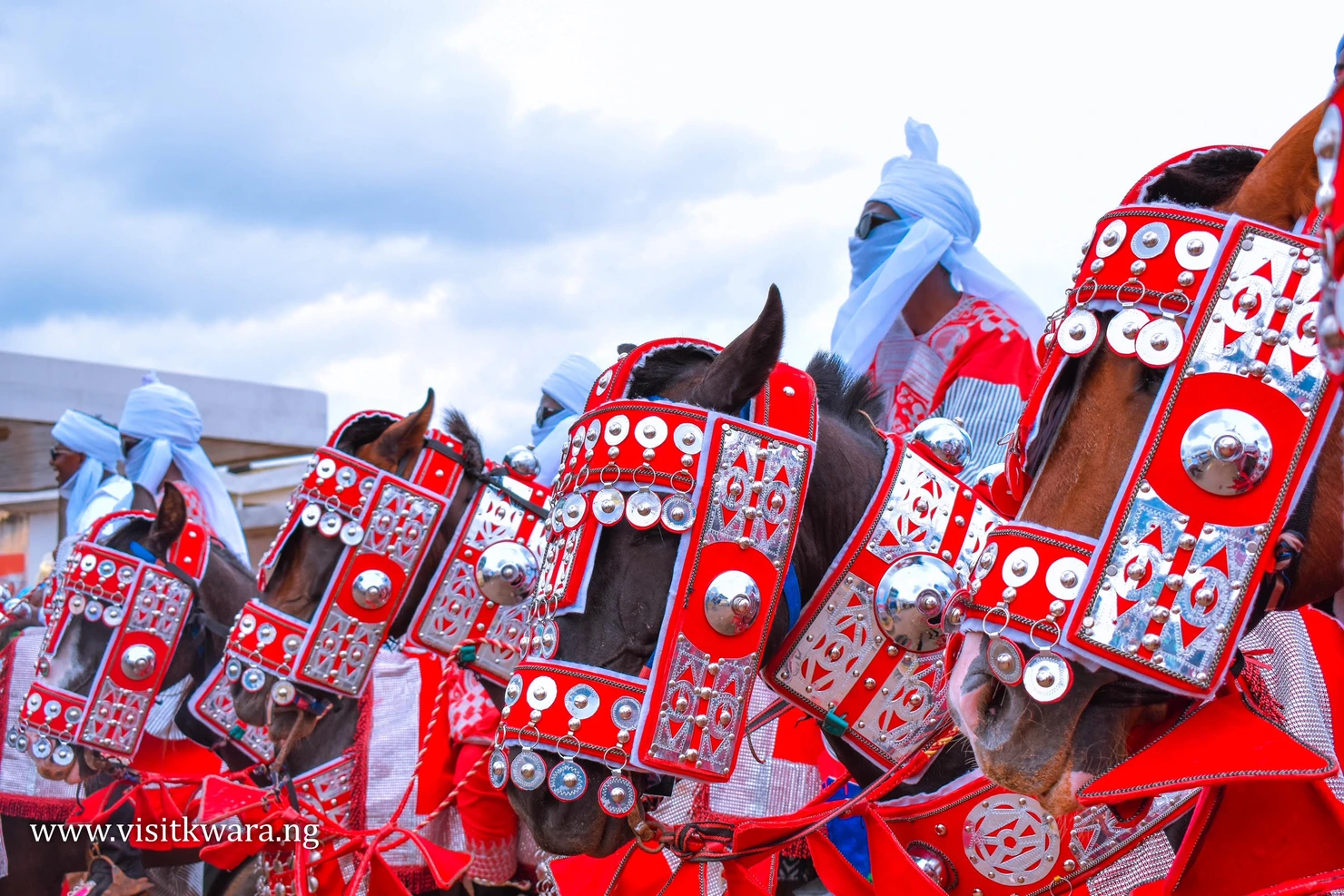
If you’ve ever stood in a crowd and felt the rhythm of talking drums sync with the steady drumming of horse hooves, you already know why the Ilorin Durbar isn’t just a festival—it’s a heartbeat. Every year, as the sun rises over the ancient city, Ilorin transforms into a moving tapestry of colour, history, and community. But this isn’t a staged performance for cameras. It’s a living tradition, carefully preserved, publicly celebrated, and deeply woven into the identity of the people who call Ilorin home.
If you’re looking for a cultural experience that blends history, unity, and raw Nigerian energy, the Durbar festival should be high on your travel list. Here’s why, and what you need to know before you go.
📜 The History – From Military Muster to Cultural Crown
The Ilorin Durbar didn’t begin as a tourist attraction or a weekend spectacle. Its roots stretch back to the early 19th century, during a period of significant political and social transformation across what is now Northern and Central Nigeria.
Following the Fulani scholarly and military movements led by Sheikh Usman dan Fodio, Ilorin came under the influence of Islamic governance. Sheikh Alimi, a respected scholar and spiritual leader, played a foundational role in establishing the Ilorin Emirate, which later became integrated into the Sokoto Caliphate structure. In those early decades, the Durbar served a clear, practical purpose: it was a military review and a public pledge of loyalty. District heads, ward leaders, and trained horsemen would gather to display discipline, horsemanship, and readiness to defend the emirate. Riders were evaluated, alliances were affirmed, and the Emir’s authority was publicly reinforced.
As peace stabilized and trade routes expanded, the need for military parades gradually faded. But the tradition didn’t disappear. Instead, it evolved. By the late 19th and early 20th centuries, the Durbar had shifted from a show of force to a celebration of culture, faith, and communal identity. It became formally tied to the Islamic calendar, taking place on the second day after both Eid-el-Fitr and Eid-el-Adha. This timing wasn’t accidental; it aligned the festival with periods of gratitude, reflection, and community gathering.
Through the colonial era and into Nigeria’s independence, the Durbar faced periods of disruption, but it never vanished. Local custodians, palace officials, and ward committees ensured the knowledge of horse training, regalia craftsmanship, and ceremonial protocols were passed down. In post-independence Nigeria, the festival gained renewed recognition as a symbol of cultural continuity. Today, it’s officially coordinated by the Ilorin Emirate Council in partnership with local government authorities, traditional ward leaders, and cultural preservation groups.
What makes this history remarkable isn’t just its age—it’s its adaptability. The Durbar absorbed Yoruba praise traditions, Nupe drumming patterns, Hausa horsemanship techniques, and Fulani regalia styles, creating a uniquely Ilorin expression of heritage. It’s a festival that remembers where it came from, but refuses to be trapped in the past.
🎶 The Experience – What You’ll Actually See, Hear, and Feel
On Durbar morning, the air around the Emir’s Palace is already charged. Long before the first rider appears, the streets begin to fill. Families set up folding chairs along the route. Elders arrive in crisp babanriga and embroidered caps. Women in bold ankara and towering gele exchange greetings like old friends reuniting. Children climb fences or sit on shoulders, eyes wide with anticipation.
Then, the drums begin.
Gangan (talking drums), flutes, and traditional percussion strike a rhythm that echoes across the city. The palace gates open, and the procession emerges. District heads, palace officials, and trained riders mount horses that have been carefully groomed, saddled with embroidered leather, and draped in ceremonial banners. The regalia isn’t just decorative; each colour, pattern, and accessory carries historical meaning, often tied to ward identity or family lineage.
The riders don’t simply trot past the crowd. They execute coordinated movements, lean into turns, and exchange call-and-response greetings in Yoruba, Fulfulde, and Hausa. Praise singers weave verses that honour past Emirs, celebrate local leaders, and acknowledge the communities that make the festival possible. Ceremonial gun salutes mark key moments, not as displays of force, but as traditional acknowledgments of authority and continuity.
Along the route, the city opens its doors. Street vendors move through the crowd with trays of kuli-kuli, zobo, suya, masa, and freshly pressed kunu. Local artisans display handcrafted saddles, woven banners, and tailored ceremonial outfits. What might look like a simple parade is, in reality, a carefully coordinated cultural event managed by ward committees, the Emirate’s traditional council, and local security agencies. There’s no VIP barrier separating “spectators” from “participants.” Everyone shares the same space, the same rhythm, the same moment.
🌍 Why You Should Visit – Beyond the Spectacle
You might be wondering: Why travel to Ilorin for a festival I can watch online? The answer lies in what a screen can’t capture.
1. It’s Living Heritage, Not a Museum Exhibit
The Durbar isn’t reconstructed for visitors. It’s practiced, refined, and passed down by people who live it. When you watch a rider adjust his posture or a drummer shift tempo to match a horse’s gait, you’re witnessing knowledge that has survived generations of social change, urbanization, and globalization.
2. Unity in Action
In a country where ethnic and religious lines are sometimes drawn sharply, the Ilorin Durbar stands as quiet proof that harmony is possible. Yoruba, Fulani, Nupe, and Hausa communities don’t just attend the festival; they shape it. They fund it, train for it, sing for it, and plan it together. The festival reflects Ilorin’s historical role as a cultural crossroads, and it continues to model inclusive celebration today.
3. Support for Local Culture & Economy
Your presence matters. Durbar season boosts local artisans, horse trainers, food vendors, transport operators, and hospitality businesses. When you visit, you’re not just consuming culture—you’re participating in its sustainability. Many young Nigerians now study traditional horsemanship, textile design, and event coordination specifically to keep these skills alive.
4. A Rare Photographic & Storytelling Opportunity
If you’re a photographer, writer, or content creator, the Durbar offers rich visual and auditory material. The regalia, the horse movements, the drum patterns, the crowd reactions—all of it tells a story. Many Nigerian diaspora members plan their visits around the Durbar specifically to reconnect with their roots and document family history.
5. Spiritual & Communal Resonance
While tied to the Islamic calendar, the festival transcends religion. It’s about gratitude, community renewal, and public celebration of shared identity. Elders see their grandchildren learning traditional greetings. Parents watch their children experience Nigerian history outside a textbook. Visitors leave with a deeper understanding of how culture survives through participation, not preservation behind glass.
🧳 Planning Your Visit – Practical Tips for First-Timers
If you’re ready to experience the Durbar in person, here’s what you need to know:
📅 When to Go
The festival takes place on the second day after Eid-el-Fitr and Eid-el-Adha. Since the Islamic calendar is lunar, dates shift each year. Check official announcements from the Kwara State Ministry of Tourism and Creative Economy or the Ilorin Emirate Council for confirmed dates.
📍 Where It Happens
The main procession begins at the Emir’s Palace in Ilorin, moves through Oja Oba and other designated city routes, and returns to the palace grounds for closing ceremonies. Viewing is open to the public along approved streets.
🚌 How to Get There
Ilorin is accessible by road from Lagos (approx. 5–6 hours), Abuja (approx. 3–4 hours), and other major cities. Commercial buses, private cars, and domestic flights to Ilorin International Airport are available. During Durbar season, book transport and accommodation early, as demand spikes.
👗 What to Wear
Modest, comfortable clothing is recommended. Light fabrics, closed-toe shoes, and a hat or umbrella for sun/rain are practical. Many visitors wear traditional attire out of respect, but it’s not mandatory. Avoid overly revealing or loud clothing that may distract from the cultural atmosphere.
📸 Etiquette & Respect
- Ask permission before photographing individuals, especially elders or palace officials.
- Stay behind designated barriers or viewing lines when instructed.
- Greet elders respectfully; a simple “Ẹ káàárọ̀” (Yoruba), “Sannu” (Hausa), or “Nagode” (Fulfulde) goes a long way.
- Avoid blocking routes or interfering with riders and drummers.
- Follow local security guidance; crowd management is taken seriously.
🏨 Where to Stay & What to Eat
Hotels and guesthouses in Ilorin city centre book quickly during Durbar season. Consider staying near Oja Oba or along the main procession route for easy access. Try local specialties: amala with ewedu, tuwo shinkafa with miyan kuka, zobo, and freshly roasted suya from trusted vendors.
Conclusion: Heritage That Rides Forward
The dust will eventually settle. The horses will be led back to their stables. The streets will return to their usual pace. But the rhythm of the Durbar? That stays with you.
In Ilorin, tradition doesn’t just echo through history books. It rides through the streets, beats in the drums, lives in the hands of artisans, and breathes in the voices of praise singers. It’s a reminder that Nigerian heritage isn’t something we inherit passively—it’s something we choose to carry forward.
If you’ve never witnessed the Ilorin Durbar in person, let this be your invitation. Step into the crowd. Greet the elders. Taste the local delicacies. Let the drumbeats guide you. You don’t need to understand every historical reference or speak every language to feel the weight of the moment. You just need to be present.
📝 Have you attended the Ilorin Durbar? Share your photos, family memories, or travel tips in the comments. Heritage grows richer when we document it together.
📚 Sources & Further Reading
This article is based on documented histories of the Ilorin Emirate, official cultural publications, and verified records on Nigerian traditional festivals. For academic, journalistic, or editorial citation, please reference:
- Ilorin Emirate Council – Official History & Cultural Archives
- Kwara State Ministry of Tourism and Creative Economy – Festival Guidelines
- National Commission for Museums and Monuments (NCMM) – Intangible Cultural Heritage Records
- The Guardian Nigeria – Cultural Coverage of Northern & Central Nigerian Festivals
- Peer-reviewed publications on 19th-century emirate formations and Durbar evolution