Sometimes, the most interesting stories in Nigeria aren’t found in the big cities like Lagos or Abuja. They’re hidden in the quiet towns where the red earth meets the sky, where people still know each other by name, and where tradition isn’t just performed; it’s lived.
Take Fajeromi, for instance.
If you haven’t heard of this town before, don’t worry. You’re not alone. Nestled in the Ifelodun Local Government Area of Kwara State, within the Omupo District, Fajeromi is the kind of place that exists peacefully off the radar. But once you scratch the surface, you realise there’s a lot going on beneath the calm.
This is a town that values memory. In fact, their biggest annual event is built around a single question: “Tanmo?” — Who knows it?
A Harmony of Cultures
Kwara State is often called the “State of Harmony,” and nowhere is this clearer than in Fajeromi. The town’s history is a beautiful blend of two major cultures: the Yoruba and the Fulani.
Back in the day, this land was a meeting point. Fulani herdsmen grazing their cattle and Yoruba farmers seeking fertile ground settled here around the same time. Instead of conflict, what happened was connection. Over generations, families intermarried. Trade routes merged. Languages mixed.
Today, walking through Fajeromi, you might hear a conversation that switches effortlessly between Yoruba and Fulfulde. You’ll see customs that borrow from both sides. It’s a living example of how Nigeria could work when people choose coexistence over division. Just about 3 kilometers away lies Okanle, a neighboring town tied to Fajeromi by family bonds and farmland. Together, they form a tight circle of kinship that has stood the test of time.
The Night of “Ta n mo”
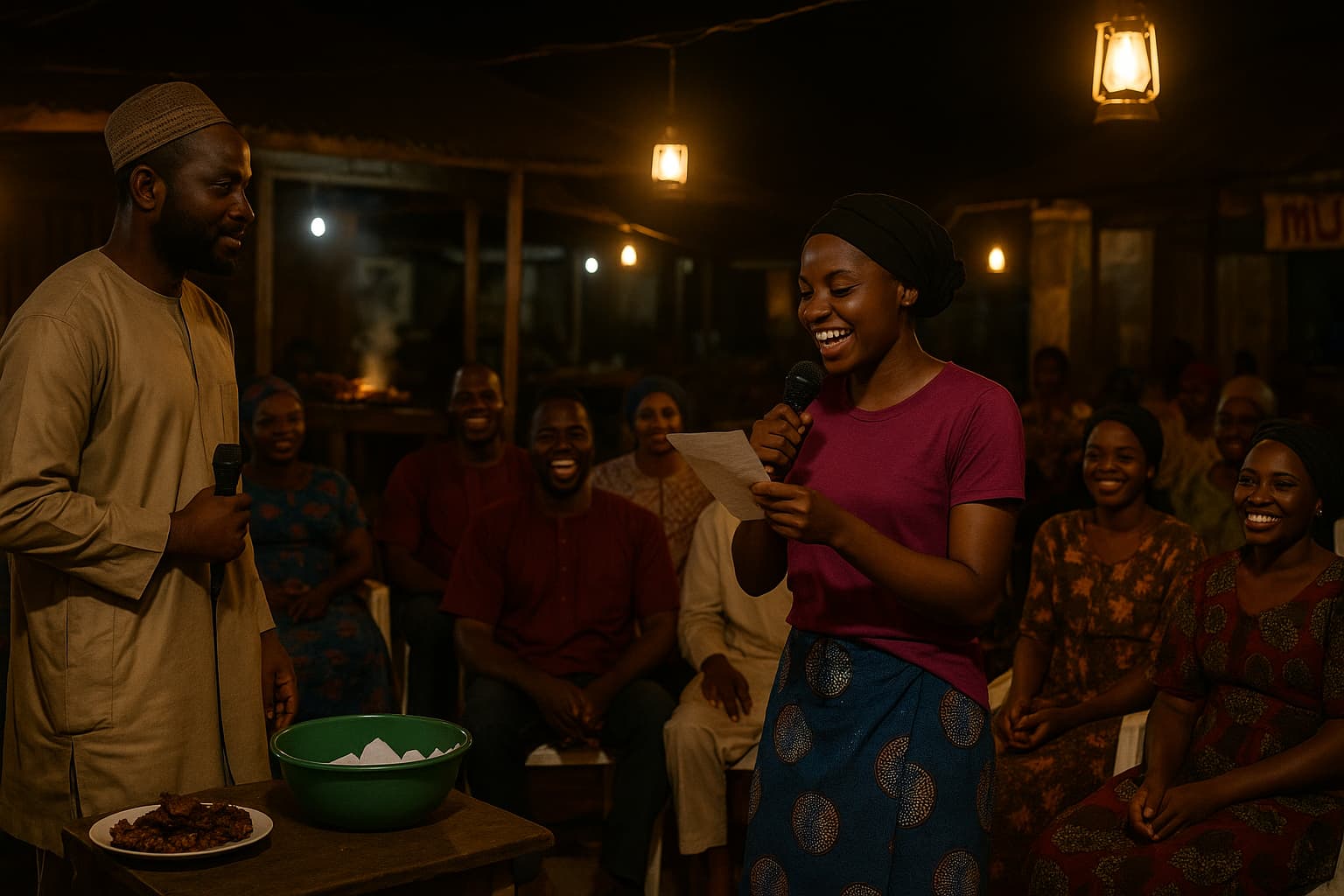
Every year, on the third day of Eid-el-Kabir, the town comes alive in a way you have to see to believe. This is the Tanmo festival.
Imagine this: It’s night. The heat of the day has broken, and the air is cooling down. The town’s marketplace, Oja, is lit up. Elders in flowing robes sit alongside youths in casual wear. Children are running around, excited by the crowd.
The air smells of smoky asun (spicy goat meat) and roasted corn. People are sipping chilled drinks, laughing, and waiting.
Then, the game begins.
A bowl is brought out, filled with folded papers. Participants are called forward to pick a number. Each number corresponds to a question read by a moderator. These aren’t simple questions like “What’s your name?” Oh, no. These are riddles. Historical trivia. Moral dilemmas. Questions that test how well you know your town, your culture and your people.
If you answer correctly? The crowd erupts. You’re a hero for the night.
If you answer wrongly? You’ll hear the teasing. Good-natured laughter that says, “Ah, you don’t know your own history?”
It’s fun, yes. But it’s also serious. In a world where oral history is dying out, Fajeromi has created a system to force the younger generation to pay attention. They are literally testing their own memory to ensure nothing is forgotten.
Old Leadership, Modern Tools: A Bridge Between Village and City
Like many Yoruba towns, Fajeromi operates under the Baale system. The Baale is the traditional head, the father of the community, guiding things with wisdom passed down from ancestors. He lives in the village, walking the same red earth paths his forefathers walked, settling disputes under the shade of the old mango tree, and keeping the flame of tradition alive.
But here’s where it gets interesting.
While the Baale holds things together in Fajeromi, the engine room of the town’s development beats far beyond its borders. The committees handling welfare, youth empowerment, security, and projects? They’re not just local. They’re global.
Indigenes of Fajeromi now live across the globe, and instead of letting distance weaken their connection to home, they’ve turned it into strength.
Meetings in Lagos, Impact in Fajeromi
Every few weeks, you’ll find a group of Fajeromi sons and daughters gathering in a hall in Lagos—sometimes a community centre. Tea is served. Notes are taken. Agendas are discussed.
“The borehole in the market needs maintenance.”
“We need to plan for Ileya celebrations.”
“The mosque roof is leaking again.”
These aren’t just talk shops. Decisions made in these rooms translate into action back home. Money is raised. Contractors are vetted. Timelines are set.
And when the time comes—during Ileya, Eid, or the annual Tanmo festival—the planning shifts into high gear. The WhatsApp groups light up. Travel plans are made. Bags are packed. People begin the journey home.
From Talk to Tangible Change
This system isn’t theoretical. It’s working.
Walk through Fajeromi today, and you’ll see the evidence:
- New boreholes providing clean water to families who once walked miles for a bucket.
- A rebuilt major mosque, standing proud as a center of faith and community.
- Renovated school blocks where children learn under proper roofs.
- Street lights flickering to life as dusk falls, making the town safer for everyone.
None of this happened by magic. It happened because people who love Fajeromi decided that distance wouldn’t stop them from contributing. They found a way to merge the wisdom of the Baale’s council with the reach of a diaspora network.
The Youths Are Coming Home
There’s a narrative often sold about rural towns in Nigeria—that the youths are leaving, the culture is dying, and there’s no future back home. Fajeromi is proving that wrong.
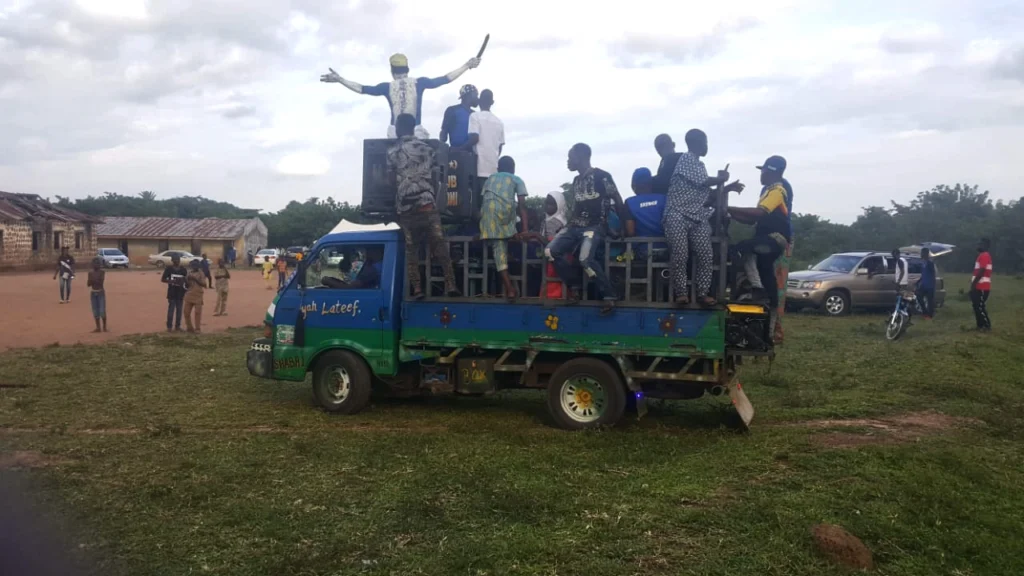
During recent Eid celebrations, the youths of the town organised a massive rally. We’re talking matching jerseys, music, and a tour of neighboring communities. It wasn’t just about partying. It was a statement. It was them saying, “We are here. We are proud. And this is our home.”
Whether they live in Fajeromi now or have moved to cities for work, they return. When festive seasons come, the dusty roads fill with cars. The quiet compounds fill with laughter. The heartbeat of the town grows stronger.
Why Fajeromi Matters
In a country as large and noisy as Nigeria, it’s easy to overlook the small towns holding everything together. Places like Fajeromi remind us that community isn’t about how many people you have, but how well you know them.
They remind us that culture isn’t a museum piece—it’s a living thing that changes when you need it to. They show us that a Fulani man and a Yoruba woman can build a home together. That a festival can be a game and a lesson all at once.
So, the next time someone asks you about unique Nigerian traditions, you can tell them about the town in Kwara that asks, “Tanmo?”
And thanks to stories like this, now you know.
Do you know any other towns with unique festivals or cultural blends? We’d love to hear about them. Share this story with someone who loves Nigerian history, and let’s keep these memories alive together.